The short answer
Pre-freeze the food, pack it tight in a cold cooler, lay the dry ice on top wrapped in newspaper, fill the gaps and close the lid without sealing it. Cold CO2 sinks, so ice on top chills everything below.
What you need
- A hard-sided or thick foam cooler. Not sure which? See the best cooler for dry ice.
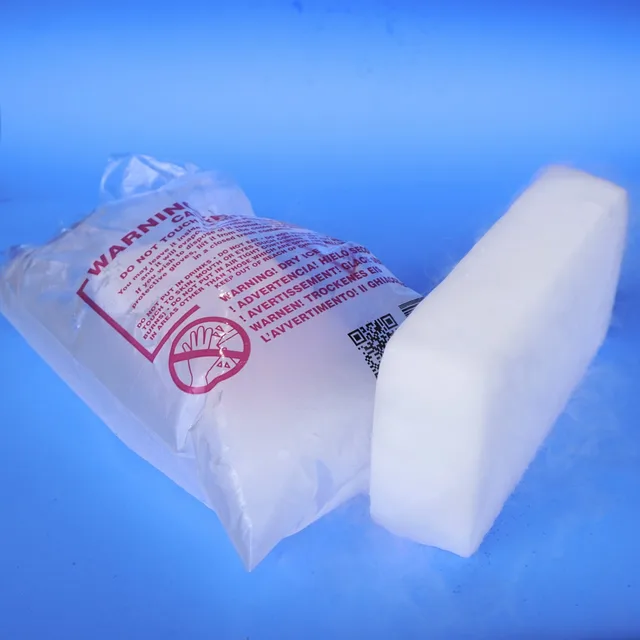
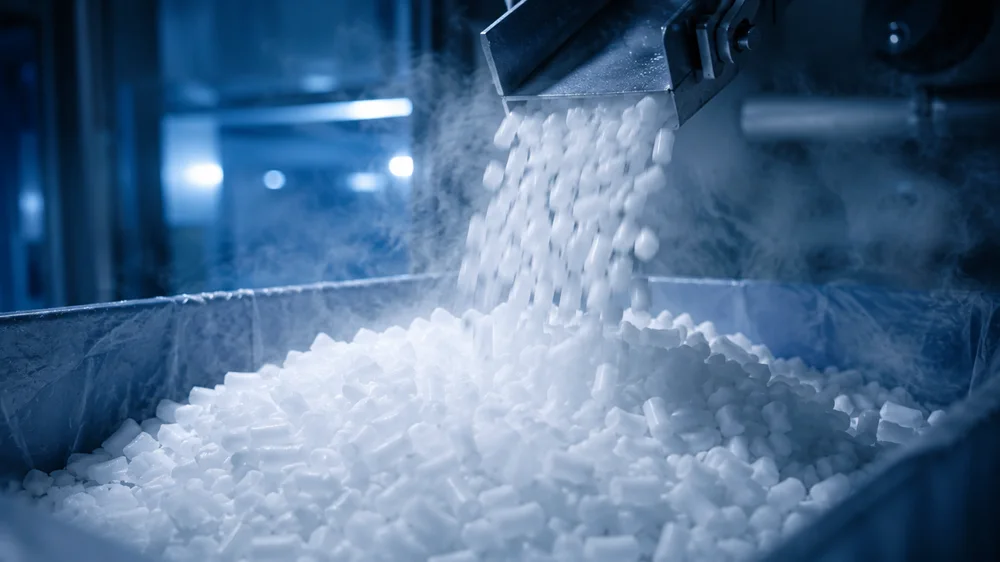
- Dry ice: blocks for long trips, pellets for short ones.
- Insulated gloves or tongs.
- Newspaper or a towel to wrap the ice.
- A sheet of cardboard for the bottom.
- Crumpled paper or towels to fill empty space.
Pack it in 7 steps
- Pre-chill the cooler. A warm cooler eats ice. Cool it for a few hours with regular ice, then empty it.
- Freeze what you can. Food that goes in frozen stays frozen. The dry ice only has to hold the cold, not create it.
- Put on gloves. Never touch dry ice bare-handed: at −109 °F it burns skin in seconds.
- Line the bottom with cardboard. It protects the liner and adds a layer of insulation.
- Pack the food tight. Heaviest and most frozen items at the bottom, no gaps between them.
- Add the dry ice on top. Wrap it in newspaper to slow it down. For trips over 2 days, add a second layer under the food too.
- Fill the gaps and close, don't seal. Stuff empty space with paper or towels. Leave a latch loose or the drain plug open so the gas can escape.
- Lid closed, not latched, so CO2 gas can escape.
- Crumpled paper fills the empty space.
- Dry ice on top, wrapped in newspaper.
- Frozen food packed tight, heaviest at the bottom.
- Cardboard on the bottom protects the liner.
Blocks or pellets for a cooler?
How much dry ice to use
From our dry ice calculator: a 55 qt cooler of frozen food needs about 40 lbs for one day and 60 lbs for three. Only need it chilled, not frozen? About 40% less. The full table by cooler size covers 30, 55 and 75 qt.
Packing drinks, not frozen food?
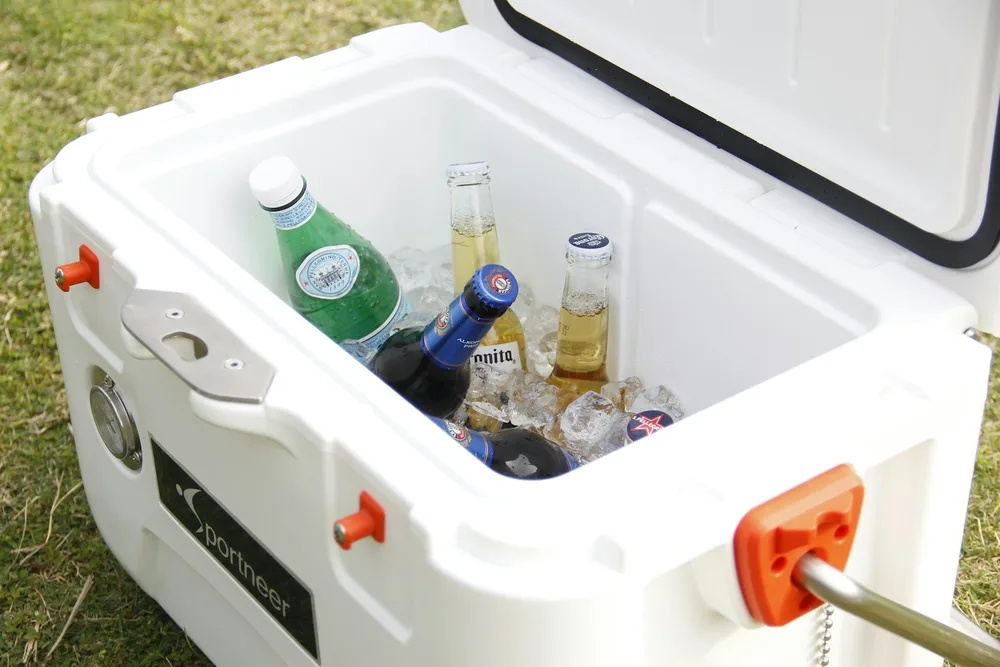
Dry ice freezes whatever it touches, and cans or glass bottles can freeze and burst. Keep drinks away from it with cardboard or a towel, or cool the drinks with regular ice. Need 2 to 8 °C without freezing? Gel packs are the cleaner choice.
Safety: before you drive off
- Never tape or lock the lid shut. Trapped gas can burst the cooler.
- Crack a window. CO2 builds up in a closed car. Carry the cooler in the bed or trunk when you can.
- Keep kids and pets away from the cooler and the ice.
Mistakes that cost you ice
- A half-empty cooler. Air steals the cold. Use a smaller cooler or fill the space.
- Opening it every hour. Each time, warm air rushes in. Group items so you find them fast.
- Ice straight on the liner. Some plastics crack in extreme cold. Put cardboard between them.
- Dry ice only on the bottom. Cold sinks, so the top of the load warms first. Put it on top, or top and bottom for long trips.
Quick answers
Does dry ice go on top or on the bottom of a cooler?
On top for most uses. Cold CO2 gas is heavier than air, so it sinks and chills everything underneath. For trips over two days, add a layer on the bottom too, with cardboard between the ice and the liner.
Can you mix dry ice and regular ice?
Yes. Dry ice on the bottom keeps regular ice frozen longer, and regular ice on top keeps drinks cold without freezing them. Separate the two with cardboard.
How long does dry ice last in a cooler?
A full, well-packed hard cooler usually holds 1 to 3 days, and a molded shipping cooler up to 5 to 7. The calculator gives the amount for your exact trip.
Do I need to vent a cooler with dry ice?
Yes. Dry ice turns into CO2 gas as it warms. In a sealed cooler the pressure builds until the lid or walls give. Leave a latch loose or the drain plug open.