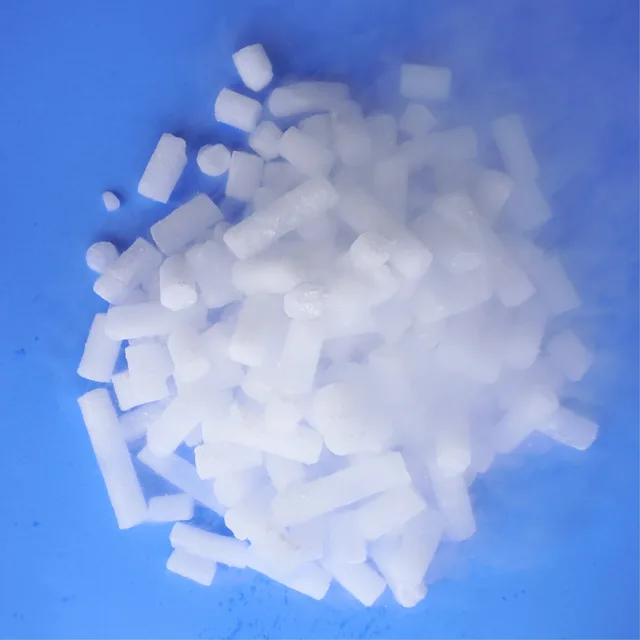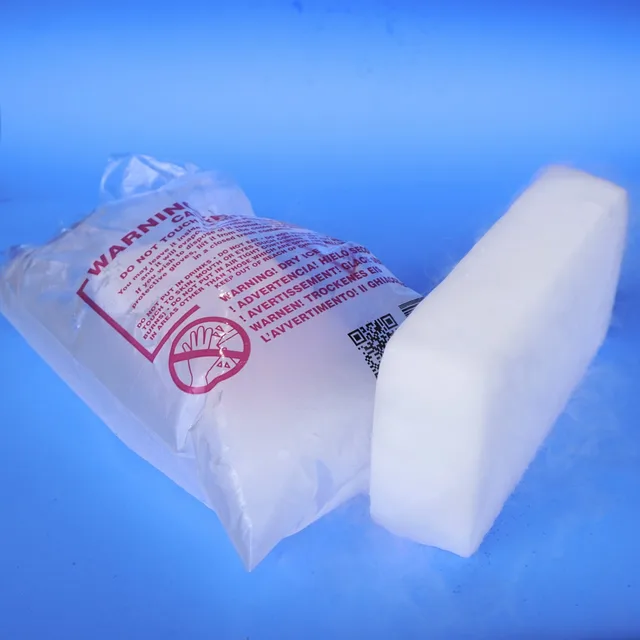
Dry ice is the solid form of carbon dioxide, and it's a lot colder than regular ice. Where a standard freezer holds ice at 0°C (32°F), dry ice sits at roughly -78.5°C (-109.3°F). Knowing that gap is the starting point for handling it safely.
Not sure how much you'll need? Our dry ice calculator estimates the right quantity for your cooler, shipment, or event in seconds.
The Dos and Don'ts of Handling Dry Ice
Do wear insulated gloves to prevent frostbite, and use dry ice only in well-ventilated areas to avoid CO₂ buildup.
Don't store dry ice in an airtight container — pressure buildup can cause it to burst — and don't let it touch bare skin.
Can You Mix Dry Ice and Regular Ice?
Benefits of Mixing
Combining dry ice with regular ice makes an effective cooling combo for transport and events. The extreme cold of the dry ice supercools the regular ice, holding a low temperature longer while keeping items from freezing too fast or getting damaged by direct contact.
Proper Handling
- Use insulated gloves or tongs for all handling
- Put regular ice in the cooler first, with dry ice on top, avoiding direct contact with the items being chilled
- Keep the cooler ventilated as the dry ice sublimates and releases CO₂
- Watch your quantities carefully, especially in a poorly ventilated space
Safety First: Using Dry Ice in a Swimming Pool
Dropping dry ice into a pool makes a dramatic fog effect, but it comes with real caution: the rapid sublimation releases enough CO₂ gas to displace oxygen around the pool in large quantities or a confined space. Use small amounts in a well-ventilated area, and keep people out of the immediate vicinity, since the extreme cold can burn on contact.
Dry Ice in a Pool: Fun and Safety Tips
Dropping dry ice into warm pool water produces thick fog that cascades over the surface. Use small pieces to control how much fog is generated, and always handle it with gloves or tongs.
- Ventilation — stick to well-ventilated areas, especially anywhere enclosed where CO₂ could displace oxygen
- Limit interaction — keep swimmers out of the pool while it's actively sublimating; the fog cuts visibility
- Start small — begin with a minimal amount to see the effect before scaling up
- Supervise kids — make sure children understand the risks and are watched the whole time
Can You Drink with Dry Ice? Safety Tips for Chilled Beverages
Dry ice can be used with drinks, but its extreme temperature — -109.3°F (-78.5°C) — means direct contact can cause severe burns. Make sure it has fully sublimated before drinking, or use small pellets in a separate compartment purely for visual effect, letting them dissolve fully first.
Choosing the Right Bag for Dry Ice
A high-quality, clear 3mm-thick plastic bag holds up to extreme cold without cracking or leaking, which makes it suitable for shipping perishables or medical supplies. The clear design lets you monitor levels while still controlling CO₂ exposure and allowing the ventilation needed to avoid pressure buildup.
Can You Touch Dry Ice?
Direct contact with bare skin causes instant frostbite and should always be avoided. Use protective equipment like insulated gloves any time you handle it.
Paper Bag or Plastic Bag for Dry Ice
Paper bags are generally the better choice — they insulate while still allowing enough airflow to prevent dangerous CO₂ buildup as the dry ice sublimates. Plastic bags risk trapping that gas, which can cause them to expand and rupture. An insulated container built specifically for dry ice is still the safest option overall.
Storing Dry Ice: Tips and Tricks
Proper storage means an insulated, but not airtight, container that lets gas escape. Read our full guide to storing and handling dry ice for more detail on avoiding dry ice burns from improper handling or storage.
Using Dry Ice Safely in Projects and Parties
- Keep the area well-ventilated
- Always handle with protective gloves and tools like tongs
- Never place dry ice directly in a beverage
For more ideas on putting these rules into practice, see our guides on creative dry ice ideas for parties and safe dry ice experiments for kids.