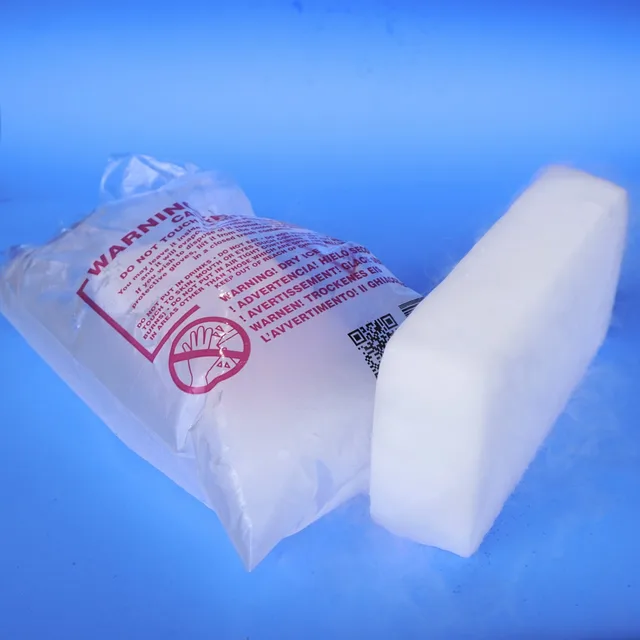
Photo: AlasdairW (CC BY-SA)
Why Use Dry Ice for Air Travel?
Dry ice works well for air travel because it holds items frozen without turning into liquid mess as it warms up. Unlike regular ice, dry ice on an airplane doesn’t melt — it transitions directly from solid to carbon dioxide gas. That makes it well suited for transporting perishables like food, medical supplies, and biological samples.
Shipping by air or through Miami International? Sub-Zero Dry Ice handles airport cold chain logistics for cargo and courier freight.
Can You Bring Dry Ice on a Plane?
Yes, passengers can transport dry ice on aircraft under specific conditions. Most airlines permit dry ice pellets in both checked luggage and carry-on bags, but only in limited quantities — typically up to 5.5 pounds (2.5 kg) per passenger. Individual airline policies can differ, so it’s worth verifying with your carrier before you fly.
Regulations for Carrying Dry Ice on an Airplane
- Labeling and packaging. Packages containing dry ice need to be clearly labeled as containing “carbon dioxide, solid (dry ice),” with packaging that allows gas to escape and prevents dangerous pressure buildup.
- Container requirements. Containers should be vented or have a loose-fitting lid. Never use an airtight container — the pressure buildup from sublimation can cause it to burst.
- Inform the airline. Passengers need to notify the airline about the dry ice during check-in or at boarding.
Can You Check Dry Ice on a Plane?
Yes — checked baggage can contain dry ice under the same weight limits and packaging rules as carry-on items. Proper labeling and notifying the airline are still mandatory.
Safety Considerations When Flying with Dry Ice
Sublimating dry ice releases carbon dioxide gas that can displace oxygen in poorly ventilated areas, so careful handling matters.
- Ventilation: packaging has to allow gas to escape. In a confined space like an overhead bin or a closed suitcase, gas can accumulate and pose a safety hazard.
- Avoid direct contact: dry ice causes severe frostbite on skin contact, so protective gloves are necessary when handling it.
Can You Fly with Dry Ice Internationally?
International flights carry their own regulations that vary by airline and destination. Check with both your carrier and the destination country’s aviation authority for compliance requirements before you travel.
Can You Take Dry Ice on an Airplane for Personal Use?
Yes — personal-use transport, like cooling food or medications, is permitted. Keep it in an insulated container and follow the same safety and labeling requirements as any other dry ice shipment.
Final Tips for Packaging Dry Ice for a Flight
- Use insulated coolers that allow gas to vent.
- Label containers with the dry ice’s net weight and contents.
- Confirm your airline’s specific requirements beforehand.
Knowing how to package dry ice for flight is what makes the difference between a stress-free trip and a hassle at the gate. If you need dry ice before a flight, check what’s available locally or order ahead of time so it’s ready when you are.